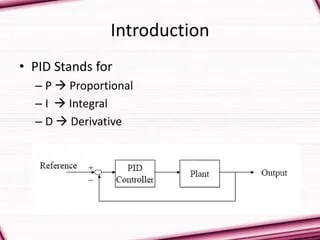
In this second article in a series about pid control, we will break down the mathematical meaning behind the p, i, and d terms in a pid control. Pid control computes the control action based on. Its versatility, simplicity, and effectiveness make it.
PID controllers | Control Theory Class Notes | Fiveable
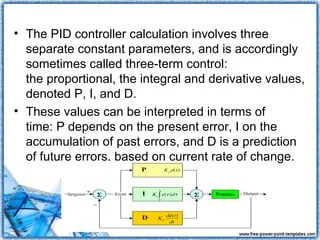
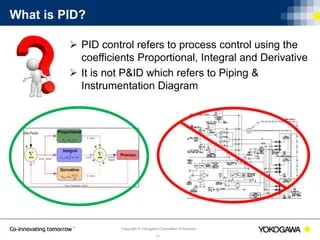
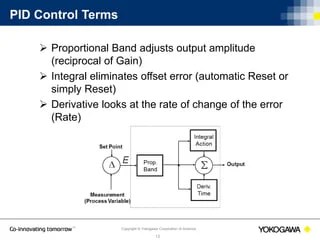
A pid controller consists of three main components
Proportional control (p), which responds to current errors
Now, combine the p, i, and d terms Use the proportional term for a fast response, the integral to eliminate the final error, and the derivative to reduce. This type of controller is widely used in industry, does not require. A pid controller calculates the control signal based on three control terms
To compute the output, the algorithm simply multiplies each of them by a gain. Pid control can be a confusing concept to understand Here, a brief summary of each term within pid (p I, and d) is presented for your learning.

Pid theory explained publish date