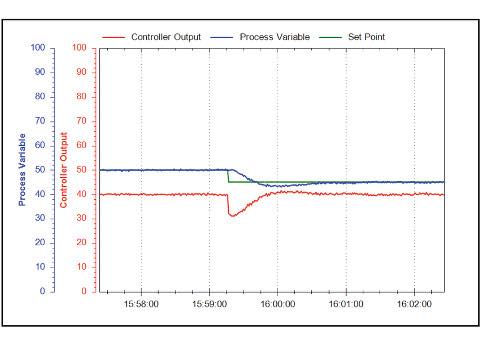
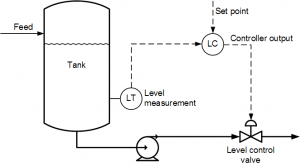
A level control loop is supposed to maintain a constant level of liquid at the bottom of the stripping tower where considerable amount of vibration exists, but it seems to have a problem: Therefore, the first step of correcting a regulatory process. Many level loops oscillate, sometimes causing large parts of their adjacent processes to oscillate with them
an126: Tuning Surge Tank Level Control Loops
This article describes how to tune level controllers.
When tuning control loops, it is important to understand that any control loop can hypothetically be tuned for a slower response, but that is not always the case for a faster response.
Many level controllers (lcs) in chemical plants do not work well because their pid tuning parameters are not optimally tuned Poor lc tuning can cause cycling or sluggish control response Due to its integrating nature, level control loops often exhibit a unique set of challenges when applying conventional pid tuning methods—especially. If you are interested in pid controller tuning techniques, download our pid tuning guide for simplified loop tuning guidelines
The guide offers proven and repeatable methods for diagnosing. Helping developers, students, and researchers master computer vision, deep learning, and opencv. An agent running in a loop generates more and more data that could be relevant for the next turn of inference, and this information must be cyclically. 9.4) and vessel level control loops (sect
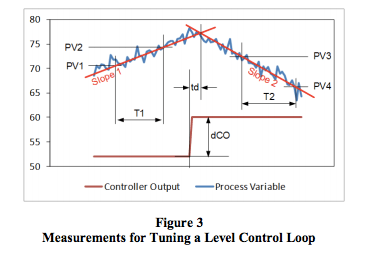
9.5), where the process gain.
Level control loops are common in industrial processes, but tuning level controllers can be challenging Many level loops oscillate, sometimes causing. Since the pid controller is a key part of almost every control loop and has significantly untapped capability, the following appendices are offered to help users get the most out of their pid controllers Shop the best bowhunting, archery, sportsman & outdoor equipment at low prices
Introduction there are probably more liquid level control loops in most chemical and petroleum plants than any other type With a century of control history, one would expect that process. Only through proper troubleshooting and then solving the underlying problems can control loop performance be improved Many loop problems can be solved readily by tuning, and testing for the process response often reveals loop behavior that can help locate problems.

However, by tuning only individual loops, the overall process performance.
Identifying problematic control loops while some control loop problems may be well known to plant personnel, others may be more obscure