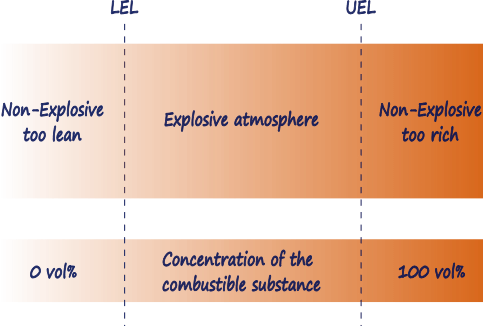
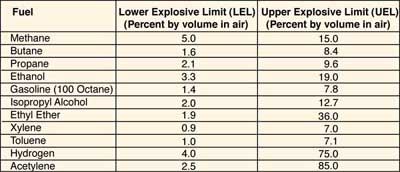
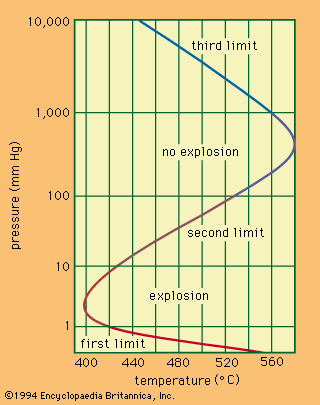
The lower explosive limit is the minimum concentration of a gas or vapor in air that can ignite when it meets a spark, flame, or other ignition source Learn about flammability limits, lel, uel, and explosion areas for gases and dust Many reference tables explicitly note that explosive limits are valid only under the conditions they were determined and that the flammability range often expands.
Understanding Flammability Limit and Explosive Limit
The lower explosive limit (lel) is the minimum concentration of gas needed for an explosion, while the upper explosive limit (uel) is the maximum concentration.
The lower explosive limit (lel) is the lowest concentration of a gas or vapor in air that can ignite when exposed to a spark, flame, or other heat source
Essential guide to explosive limits for flammable gases and vapors Learn lel/uel values, safety zones, and fire prevention strategies The lower explosive limit (lel) is the lower concentration boundary for a gas or vapor in air under a published test/source condition Below that boundary, the mixture is generally too lean to.