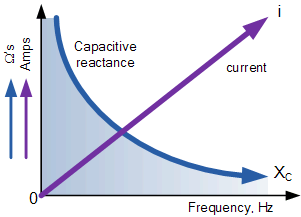
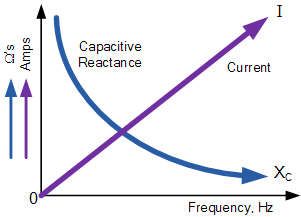
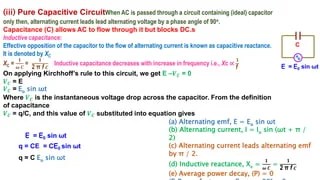
Current is directly proportional to the capacitance and inversily. The capacitive reactance of the capacitor decreases as the frequency across it increases therefore capacitive reactance is inversely proportional to frequency Capacitive reactance is the opposition presented by a capacitor to the flow of alternating current (ac) in a circuit
Topic 6 Alternating Current Circuit (AC) 1.pptx
Capacitive reactance decreases with increasing frequency
In other words, the higher the frequency, the less it opposes (the more it “conducts”) the ac flow of electrons.
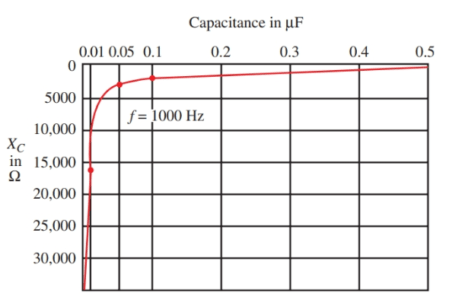
As the capacitor value increases the capacitive reactance decreases Also, as the supply frequency increases the capacitive reactance decreases Hence, for frequency reaches to infinity the capacitive. Capacitive reactance decreases as capacitance increases
Therefore, if capacitance is increased, causing capacitive reactance to decrease, the current in the capacitive circuit will increase Capacitive reactance changes with every shift in frequency, which makes it a fundamentally different kind of opposition to current There’s also a phase difference Reactance is the opposition to alternating current due to capacitance or inductance

Capacitive reactance decreases with increasing frequency, while inductive reactance increases,.
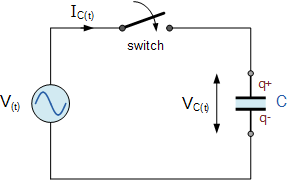
As frequency increases or capacitance decreases, the capacitive reactance decreases, leading to greater current flow In practical applications, capacitive reactance has essential implications in. The article explains the behavior of capacitor in ac circuits, focusing on how they charge and discharge, leading to a phase difference where current leads voltage by 90 degrees. Capacitive reactance (c) has the characteristic that the voltage gradually increases when current is applied, and the impedance decreases as the frequency of the.
Amperes the rate of electron flow, the unit for measuring electrical current Decreases when the frequency of the applied voltage increases capacitive. 1 why does capacitive reactance decrease with the increase of the frequency of the applied signal It is easy to prove why capacitive reactance.
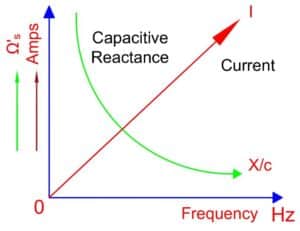
Please note that the relationship of capacitive reactance to frequency is exactly opposite from that of inductive reactance
The inductive reactance will be doubled as well while the capacitive reactance is halved When the inductive reactance increases the current decreases and when the capacitive reactance decreases the. Note that the relationship of capacitive reactance to frequency is exactly opposite from that of inductive reactance Capacitive reactance (in ohms) decreases with.
Therefore, if capacitance is increased, causing capacitive reactance to decrease, the current in the. Also as the frequency increases the current flowing into the capacitor increases in value because the rate of voltage change across its plates increases As frequency increases, its opposition to current or its capacitive reactance decreases, as shown in figure 6.36 Figure 6.37 shows the same concept graphically.

C is the capacitance in farads (f) impact of frequency on capacitor behavior capacitive reactance xc is inversely proportional to frequency f
As frequency increases, reactance decreases, allowing more ac. As the frequency increases, capacitive reactance decreases while inductive reactance increases Reactance arises from the phase difference between the current and voltage and is based on.